Using wills to identify community networks

Diagram showing the networks provided by the Wills of three men in a small village in Wharfedale between 1693/94 and 1712/13, plus the Probate Register entry of another man.  The network seen through these documents includes a total of 36 people.

The ‘All About That Place’ event, as well as a short course I was doing at the same time: Progressing Your Local History Research (346) through Pharos Tutors, inspired me to start a couple of ‘One Place Studies’, and to register them with the Society for One Place Studies.

One of my studies, Starbotton in Wharfedale, focuses on the Early Modern period – roughly 1500-1750, although depending on the records available, it may end up homing in on just part of that period. Starbotton is part of the parish of Kettlewell and importantly, no parish registers for the period before 1698/ 1700 have survived. Although there are some Bishop’s Transcripts for the seventeenth century, survival of these records too is limited and patchy. This means I have no continuous register of any kind to use as a foundation for rebuilding the community of people in Starbotton before the last fifty years of my period of interest. The primary challenge will be to locate as many alternative sources as possible and then find ways to make them work together.

Prior to the Local History course my research in Starbotton had focused on my Simondson family. I already had Wills for three of the Simondson men who died between 1693/4 and 1712/13, plus the Probate register entry only for another, John, who died in 1705 and named Anthony as his executor. Christopher’s was a holographic Will, meaning a group of trusted family and friends gathered at his deathbed, helped him to organise his thoughts, and wrote up the document after his death, all of them signing to verify that the contents were the wishes of the deceased. The Wills of Lister and Christopher are accompanied by Inventories, which are also signed by everyone involved in that process.

Something I had previously noticed – both here and in another small village where I’ve accessed quite a few Wills – was the sense of community evoked through all the people involved in the Probate process – witnesses, executors, the men doing the inventory, bondsmen and so on – and that’s in addition to the named beneficiaries. They all pulled together to help each other at this time of need, and to ensure the wives and children were properly cared for.

With this in mind I decided to ‘map’ the network created by the three Simondson Wills, plus John’s Probate Register entry. Every fact, and every single person shown on the network chart at the top of this post came from a close reading of these Probate documents. I do have some additional information about some of the people, gained from other records. For example, it is Thomas Simondson who is my direct ancestor, and I have more information about him and his family, but his Will does not seem to have survived. I was surprised to find that, excluding beneficiaries, there were twenty people involved in this network-mapping process: nineteen men and one woman. Adding in the named beneficiaries brings the total to thirty-seven: eleven women/ girls and six men/ boys are named beneficiaries. This younger generation will make my job a bit easier since most of them undergo some religious rite or other that brings them into the period of the surviving parish registers.

Homing in on householders though – which in itself would be a great step forward – these Wills have given me a LOT of information about the village community. I do recognise most of the surnames and in some cases the first names too. Comparison with a transcript of the 1672 Lady Day Hearth Tax return, and also with a list of churchwardens from all available Bishop’s Transcripts indicates that most are from the parish. However, the parish includes Kettlewell as well as Starbotton, so there is still work to do in trying to separate out the two.

A person’s ‘community’ is not necessarily restricted to his or her village. In addition to the village community there will be wider networks too, based on friendships, marriages, worship (e.g. Nonconformists in rural locations would have a geographically wider network), business, market days, and so on. Based just on my Simondson family, I know that they had family connections throughout Wharfedale and into what is now Lancashire too. This also seems to me to be part of the history of a Place: where were the wider networks and connections? What were the reasons for this? And was it different for people from different social levels?

I’ve now located about ten more Wills for the same period for other testators living in Starbotton and will gradually collect and transcribe these, looking for overlaps, and comparing the findings to other records known to be for residents of Starbotton.

Not such ‘little’ lives after all…

One of my great grandfathers, George, was adopted. This was in the 1860s, so it was an informal arrangement and the couple who took him in were his biological father’s older sister and her husband, whose name was Feargus.

Feargus had a middle name: O’Connor; and although I was new to genealogy at the time of discovering all this, I already understood enough to know there was a strong likelihood that this was a maiden name, probably from his mother’s side and probably the two names indicating an Irish connection. However, following back Feargus’s mother’s and father’s lines for a few generations, I could see they were solid Yorkshire stock. No Irish, and no O’Connors. It was a mystery.

The solving of the mystery, when it came, was from a surprising source. But before going onto that, I want to tell you something about Feargus’s parents.

They were nail-makers, and they lived in the village of Hoylandswaine, not far from Barnsley. I found a little book published by the Barnsley Family History Society: The Nail-Makers of Hoylandswaine, collated and compiled by Cynthia Dalton. It includes not only the history of nail-making in Hoylandswaine, but a description of the life, together with potted biographies of the nail-makers recorded in the censuses. I learned that the life of a nail-maker was a hard one. Some had their own forges and worked as a family unit; others rented space in someone else’s forge; and yet more worked for a nail master on his premises.

Click here to see a surviving Hoylandswaine nail forge, now a museum.

Usually, the men started work at 6am, and might keep going until 10pm, with breaks only for meals throughout the day. Pay was low, and since some of the nail masters were also the village shopkeepers or inn-keepers who couldn’t resist squeezing a little extra profit from their workers, payment may have been made in the form of provisions from that other business. Women did the work too, for less money, and alongside taking care of the house and children.

Hoylandswaine nailers go rat-a-tat-tat,
On thin watter porridge, and no’ much o’ that

Anon. (In: Cynthia Dillon: The Nail-Makers of Hoylandswaine)

It seemed a very small life: long hours of repetitive work, isolation, hardship, trapped by low wages and unscrupulous employment practices, and no power to change any of that. I wondered what time was left for enjoyment, or if life was one long slog from beginning to end; and then I set aside Feargus’s family and moved on to other lines.

It was years later – early 2019 – when the riddle of Feargus’s Irish connection was solved. It came while I was reading John Waller’s The Real Oliver Twist – the true story of pauper apprentice Robert Blincoe. Part two (p.79) begins with a quote – and I gasped when I saw the name:

‘Scores of poor children, taken from workhouses or kid-napped in the streets of the metropolis, used to be brought down by […] coach to Manchester and slid into a cellar in Mosley Street as if they had been stones or any other inanimate substance.’

Feargus O’Connor (1836)

I looked him up… and realised I had known Feargus O’Connor all along – I learned about him in ‘A’ Level history at school, and in view of the Leeds connection (below) we would have spent some time on him, but my brain had mostly opted to remember the activities of ‘Orator’ Hunt.

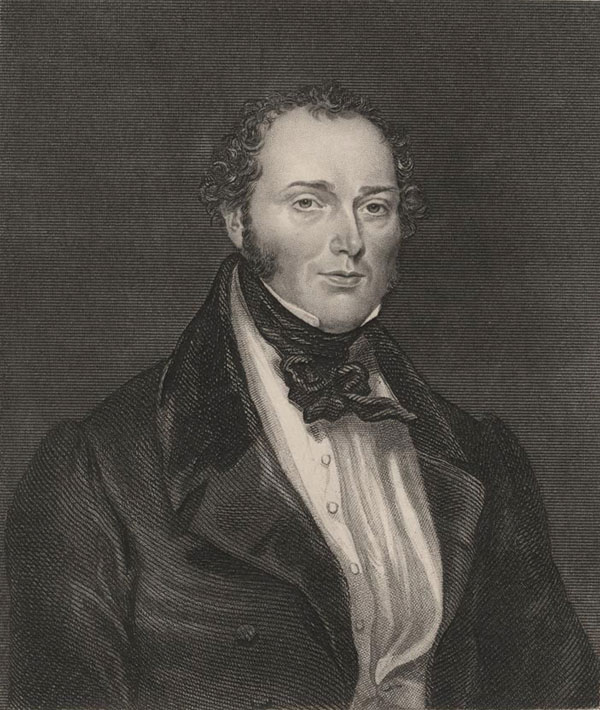
Stipple engraving portrait of Chartist leader Feargus Edward O'Connor.
Feargus Edward O’Connor (c.1796-1855)
Stipple engraving portrait by unknown artist
Source: Wikipedia. This file has been extracted from another file, Public Domain

Feargus Edward O’Connor was an Irish landowner and lawyer, elected as M.P. for Cork in 1832. (Ireland was part of the United Kingdom, so his seat was in Parliament at Westminster.) In 1835 he was re-elected but disqualified on the grounds that he had insufficient property to qualify as an M.P. (although it seems that was not so). It was from this time onwards that he began to agitate for radical reform in England, speaking at rallies and meetings and emerging as the leader of the Chartist cause. He campaigned for the ‘Five Cardinal Points of Radicalism’, which would later be five of the six points embodied in the People’s Charter. In 1837 he founded the radical Northern Star newspaper in Leeds; and then in 1840 was arrested for sedition, serving fifteen months in York Castle gaol.

1840 was the year my adoptive great great grandfather was born. His parents’ choice of name – Feargus O’Connor Heppenstall – speaks volumes. It turns out they did know the conditions in which they were working were unjust. They could imagine a better life. And what’s more, they knew of developments throughout the country and the movement for change; and through the work of Feargus O’Connor, they saw a way to achieve that. It turns out their lives were not so little after all. They were fighting for a better world at a time when that was much-needed; and I am proud of them.

In fact my tale is awash with Feargus O’Connors, all of them in Leeds. As a young man my adoptive great great grandfather Feargus made his way to Leeds and became a butcher. His adopted son, my great grandfather George, would go on to name his own first son Feargus O’Connor Heppenstall too, although I don’t think George was a political man, and believe this was a tribute to the man he considered his father rather than to the Chartist leader.

The original Feargus O’Connor was not a man without controversy. Undoubtedly charismatic, he was admired for his energy and powerful oratory, but also criticised for advocating physical force if necessary in order to achieve his goal of universal male suffrage. In this, he went further than the moderate line taken by other Chartists.

I was reminded of all this last week, while watching videos recorded by experts for All About That Place. One such expert was Mark Crail, who has a website and a blog about Chartist Ancestors, as well as a separate website about Trade Union Ancestors. There is also a page dedicated to the Six Points of the People’s Charter. Some of the articles focus on Chartism in different parts of the country; some on leaders. There are quite a few blog posts dedicated to Feargus O’Connor’s life and work. If your ancestors were in the industrial heartlands during the nineteenth century, or if you know they were active in the Trade Union movement, you might be interested to explore these sites.

This is what I love about family history. The most ordinary seeming people can have surprising stories to tell if you delve a little deeper. It is through these stories that we can learn about the lived experiences of people in different places, classes and at different times throughout our history.

All About That Place

Advertising image for All About That Place, featuring the words 'Join All About That Place, a unique challenge event #OnePlace'

Today is Day 2 of All About That Place. I’m sure at least some of you will already know about it, and have been watching videos. I hope you’re enjoying it as much as I am. For everyone else… this is time sensitive information!

All About That Place is a ten-day event to celebrate the 10th Anniversary of the Society for One-Place Studies. It has been developed through collaboration between the Society of Genealogists, the Society for One-Place Studies, Genealogy Stories, and the British Association for Local History. However, other organisations are sponsoring specific days.

The event is being run via a pop-up Facebook Group and YouTube channel. I couldn’t find a pop-up YouTube channel specific to the event but was guided via a request for information on Facebook towards the Society of Genealogists channel. However you access the videos, they last approximately ten minutes each, and a new one appears every hour of every day, between 8am and 7pm British Summer Time. However, the time is not critical, since each video will remain online until 1st October, after which some will disappear but others will remain a little longer – only until later in October though… which is why I said this is time sensitive. By late October this post will be obsolete…

There are over a hundred pre-recorded talks to watch. They are free. My plan was to watch only the ones that interested me, but so far almost all of them have done so. I didn’t expect this to be as brilliant as it is! Clearly a great deal of work has gone into organising it.

The talks so far have looked at maps, including some great websites where mapping resources are available – some of which I’m sure you’ll already know, but others will be new to you. There have also been introductions to the kinds of resources specific organisations hold, and how they can help you in your research, like the Society of Genealogists. Some videos are about specific One-Place Studies.

As this is all about the Society for One-Place Studies, what they really want is for you to be fired up and start your own Study. They are reporting a good few new registrations already, so from that perspective this has already been a success. However, the enthusiasm amongst people participating, hosting or like me just watching is tremendous. Although all these origanisations are in the UK, people are watching from other parts of the world, and some of the One-Place Studies are in other parts of the world too.

Do give it a go!

Dade Registers

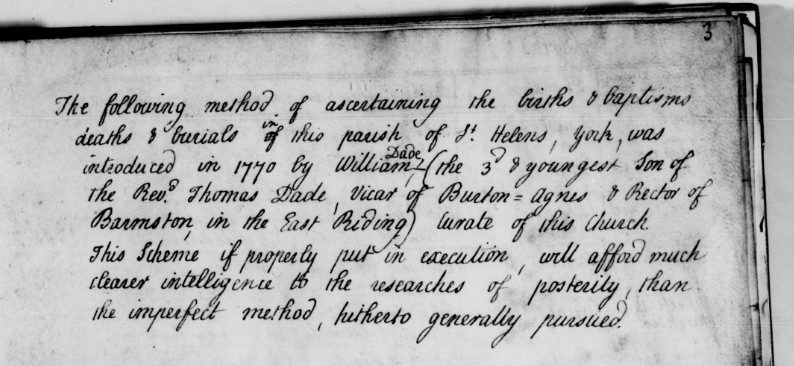
I write in praise of the Rev. William Dade, a Yorkshire clergyman who, from 1763 until his death in 1790, was curate, vicar, and rector of five parishes in the city of York and two in the East Riding of Yorkshire. In 1770, while curate of St Helen Stonegate in York, he devised a system of recording information on baptism and burial registers far superior to the usual records.

Entry by Rev William Dade at beginning of Baptism Register of St Helen Stonegate, York, in 1770.
Original data: Borthwick Institute for Archives, Ref PR-Y-HEL-3 Source: FindMyPast

So useful was Dade’s method that in 1777 the Archbishop of York required its introduction throughout the diocese. Unfortunately, the administration of the scheme was so much work for parish priests that many, particularly in more populated areas, refused to comply. I can see their point – and of course, sometimes the information is only as good as the informant’s knowledge. But even so, if you find examples of these in your ancestry you feel like you’ve struck gold!

The baptismal registers were to include:

  • Child’s name, seniority (e.g. first son), date of birth and baptism
  • Father’s name, profession, place of abode and descent
  • Mother’s name, maiden name and descent.
John Hunter Baptism Register entry, 1778, Tadcaster.
Original date at Borthwick Institute for Archives, Ref P.R. TAD / 8 Source: FindMyPast
Click for big!

Although the Archbishop of York’s request applied only to his diocese, the practice of recording more information than strictly required – just for personal satisfaction – was not unique to parishes within the diocese of York. Today, any register in which the clergyman habitually recorded extra information may be termed ‘Dade Registers’. They can be found throughout England. Their locations, together with start and end dates, are indicated on the Dade Map developed at Brigham Young University. So even if you don’t have ancestry in Yorkshire you might be lucky.

Rev. Dade applied similar diligence to his burial registers.

Margaret Simpson Burial Register entry, 1771, York St Helen Stonegate.
Original date at Borthwick Institute for Archives, Ref PR-Y-HEL-3 Source: FindMyPast
Click for big!

Below is an example from my own research that I simply couldn’t have done without this baptism record. It was the only way I could differentiate between two marriages, each involving a John Seymour and an Elizabeth, all married the same year in the same small parish.

After 1813 Rev. Dade’s system largely disappeared as the Church of England began recording baptisms and burials on pre-printed forms.  They were of course, much better than the usual pre-1813 registers, but I think you’ll agree that Rev. Dade was a cut above!

*****

I’m absolutely rushed off my feet with work and deadlines just now and for the rest of the year may not be able to publish more than one post per month. I’ll do my best, but we’ll have to see how it goes. I hope to be back to normal by the New Year.

Creating a template for GRO Birth and Death digital download images

When I was preparing my last post about the GRO’s new option for instant-access digital downloads of the images for selected birth and death registrations, I had hoped to be able to include a downloadable template for you to use for your own records. It seemed it wasn’t possible for me to do that. So the next best thing is to show you how to create your own.

I created the template in my last post using Photoshop – just because I already had it open and wanted to tweak one of the images. If you already use Photoshop or something similar you won’t need me to show you how to do this. However, more of you are likely to have Word, so for anyone who’s more used to using Word for plain old typing and would like to know how to create a template, here’s a tutorial. I hope it’s useful to at least some of you.

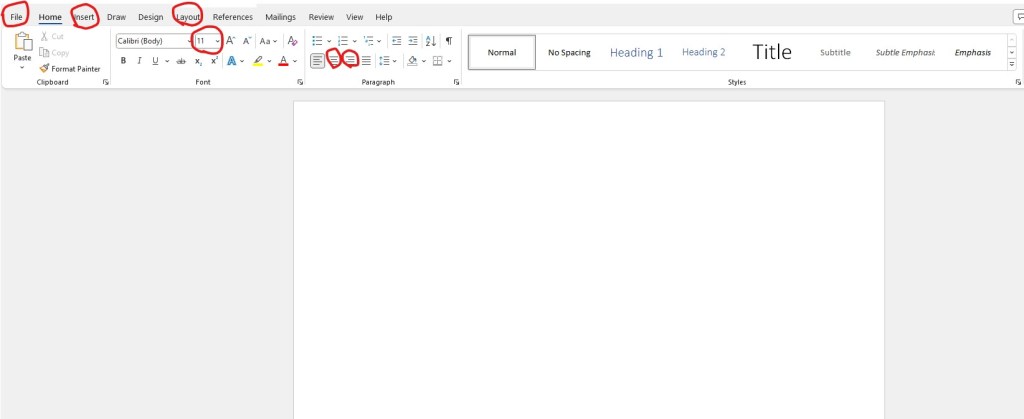
1. First, open a new document in Word. All the options from the top menu I’m about to mention are indicated below.

A screen grab of a Word document. There are no words on this document yet, but six commands from the top menu vbar are indicated.  They are File, Insert, Layout, Font size, and the centreing and position to right commands.
Click for bigger!

2. Next, change the layout of your document to landscape. To do this click Layout, then Orientation, then Landscape.

3. On this document, type whatever wording you would like. I went with:
“Death Certificate
Digital image download from GRO website
Downloaded by [your name] on [leave this blank, date to be added to each new document when you use the template]”

4. Then adjust the size of the font by changing where it says ’11’ on the example above. I went with font size 36 for the title, 22 for the ‘digital image’ description, and 14 for the bottom line. You might find it easier to use the regular ‘title’ options on Word but I wanted to control the spacings between the rows so this way suited me better.

I then moved the bottom line down the page, using the return key a few times, before centering the top two lines and positioning the bottom line over to the right (see the two lower circled options indicated on the image above.

My document now looks like this.

A template, almost complete, for using with the GRO's digital download Birth and Death registration digital download images.

For the rest of the template we need information from the GRO website.

As explained in my last post, the downloads are available for three months after ordering/delivery. At the time of delivery you should get almost instant access to the images. However, I ordered mine a few weeks back, so I accessed all of the following information by going into ‘My Orders’ from the menu on the right.

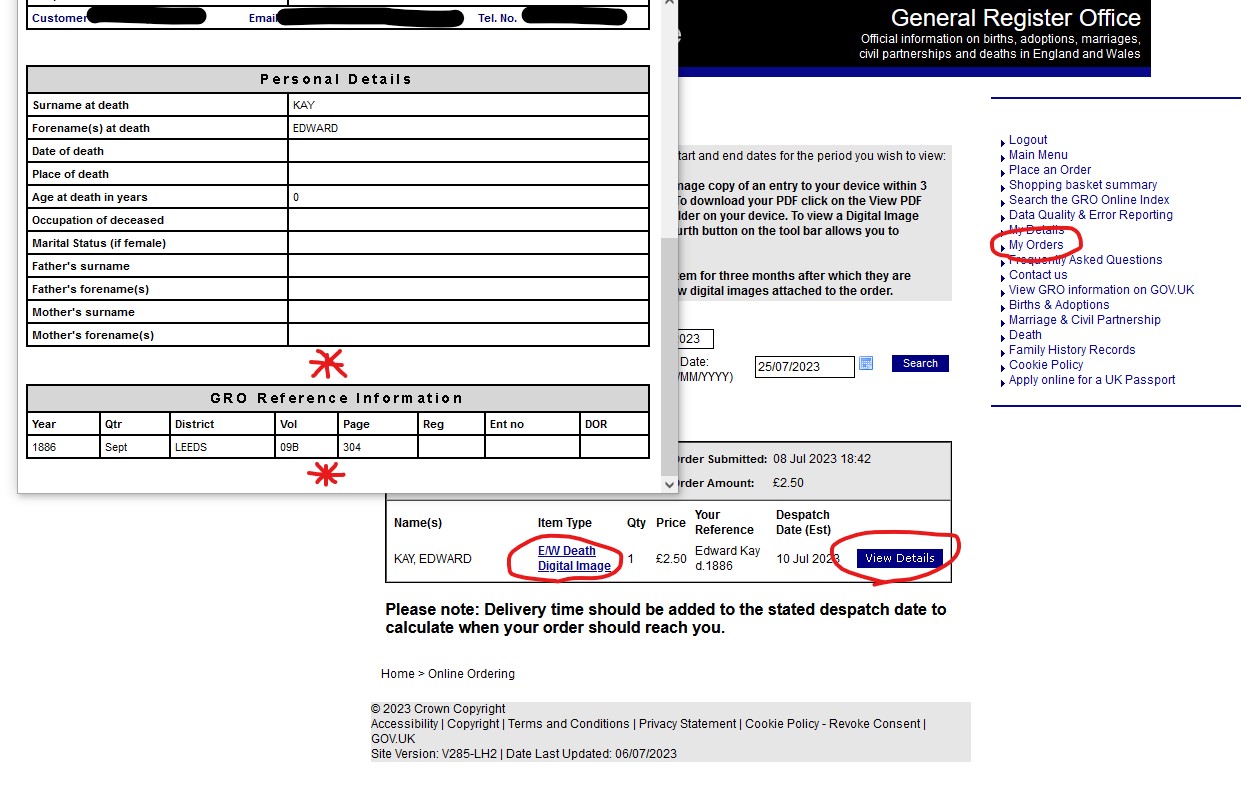
5. From that page – which is what’s shown below – you can download your ‘E/W Death Digital Image’. But first, since our focus here is on creating a template, click on ‘View Details’, and scroll right to the bottom of the pop-up that appears at upper left of screen.

Screen shot of GRO digital download collection plage.  Three links are indicates.  These are 'My Orders', 'E/W Death Digital Image', 'View Details' and the GRO Reference Information which is found by scrolling to the bottom of the 'View Details' pop-ip.
Click for bigger!

What we need is the GRO Reference Information (between the two red stars). Put your cursor at the beginning of the word ‘Year’, and highlight/copy everything along that line through to ‘Page’. Then paste this into your Word document just above your ‘Downloaded by…’ line. I centred this.

5. There is just one more thing to add to the template. We need a description of the columns, so that we can make sense of the information on the digital images from the death register as we download each one and insert it into our template. I copied that from the digital download page. Click on ‘E/W Death Digital Image’ (as circled with red on the above image), and you’ll find the digital image you’ve purchased, but above that there are the column headings. I screen-grabbed that and saved it. You can do the same thing, or you can click on the image I copied, below, to make it bigger, then right click and save to your own computer in a place you’ll find handy. The one I’ve included below has been lightened a little in Photoshop to make it easier to read the lettering. The one included in my example template at the bottom has not been lightened, so you can see the difference.

6. Either way, you now need to insert it into your Word document beneath the title and description lines. To do this, place your cursor a couple of lines below the ‘Digital image download from GRO website’ line, then click on Insert, then Picture, then ‘This Device’, and navigate to where you save the image to retrieve and insert it.

Column descriptions for GRO Death Certificate.  This is for use with digital download images.
Click for bigger!

Your document should now look something like this.

A template for using with GRO digital download death register images

7. You’ll now need to save this document, but instead of saving it as a regular Word document, click on File, then Save As, and then from the drop-down menu, save as a Word Template (.dotx).

As you get each new GRO digital download image from the Death Register, all you have to do is open the Template, download and insert the new image, and copy the date, quarter, district, volume and page details from the website (just as we copied the upper line in step 5. You’ll also need to insert the date. Remember to save each new record you create as a regular Word document.

Comparing this to the one I originally created in Photoshop, there are a few differences, but you can see how it all comes together.

If you like how this works for you, you can create another one for your Birth Register digital downloads.

I hope you found these instructions clear. Let me know how you get on.

Instant-access Birth and Death certificate images

I know a lot of you will already know this, but for those who don’t…
The General Register Office website has made available reduced cost instant-access digital images of selected birth and death entries.

The ‘certificates’ available through this new Online View Digital Image Sevice are as follows:
* Birth entries from 1837 up to 100 years ago
* Death entries from 1837 to 1887

When you place an order using the GRO’s online indexes, where this new service is available (that is, for the year-spans indicated above), a new option will appear for ‘Digital Image’. Just click on the ‘button’.

A screen grab of a returned entry on the GRO Online Death Index, indicating the new 'Digital Image' option for ordering

These digital images cost just £2.50 each.

All the information you need to be able to order and retrieve your images is to be found in the GRO’s Online View Digital Image Service Guide.

There is a clear statement that these digital images have no “evidential” value. A paper certified copy is still required for official purposes. Examples given in the statement include ‘applying for a passport or driving licence, or where required to give notice of marriage/civil partnership’. None of these seem entirely applicable here! But in our research I can imagine someone requiring a certificate to evidence nationality of a great grandparent, or to demonstrate generational ancestral connection.

What you get
The digital image you’ll receive is just the extract from the GRO’s central register, nothing more. So looking at the example below, which is a full, certified copy, you get a lot of important wrap-around information. When you take advantage of the new instant-access digital download all you get is the image in that central section, which is extracted from the GRO Death Register.

An example of a certified copy of an Entry of Death

I really like having the official document, certainly for my direct line and anyone else whose story I’m following – but that’s expensive and I’m gradually buying only the ones I need. However, I decided this would be a great way to get information about causes of death for all the siblings who died in infancy over that fifty year period, 1837-1887, so I’ve made a start on that.

Remember though that even the full certified copy of a Birth, Marriage or Death certificate is still only a secondary source if you purchase it from the GRO. The original is kept at the local Registrar’s Office. (I wrote about this in a blog for the Pharos Tutors website, that you’ll find [here] )

As soon as your online payment goes through you can click on a link to see the image. I found it took a few minutes before I could actually download it to my computer.

Having done that it seemed to me there was some additional essential information I really did need to be able to record and cite this effectively, so I created a template in Photoshop that I can use every time I download one of these. It includes:

  • Title, making clear this is a digital download, since this does not have the same standing in law as a certified copy
  • Column headings describing the content of each column
  • The digital image
  • The GRO reference, including year, quarter, district, volume and page
  • The date I downloaded the digital image

This information transforms a useful digital image into a ‘source’, decribing what it is, and details of precisely where the original information is to be found, ensuring that anyone who wants to check my research in the future can find it again.

A template for recording a digital image of an entry on the Death Register along with essential source information.

Having done this I’m still trying to decide if I’d be happy to have all my ancestors’ death certificates in this format. After all, for the cost of buying two of the full, certified copy versions I can get nine of these, and set into my template they don’t look so bad…..

If you’ve downloaded any of these instant access digital Birth or Death certificates, I hope you’ve found lots of interesting information.

Witnesses, Sponsors, Beneficiaries and Executors

Not long after publishing my last post about witnesses at marriages, I came across A Tribute to Ted Wildy, and his Marriage Witness Indexes (MWI) on the GENUKI website. Commenced in July 1988, Ted Wildy’s UK Marriage Witness Index (MWI) was one of the first mechanisms for the sharing of genealogical information electronically, although it isn’t clear to me from what I’ve read how it was disseminated. Ted died in 1997, and since then much of the MWI seems to have disappeared. Looking online, there are still discussions about it every now and then, and an Australian excerpt from it for the state of Victoria is available online. In 2009 there was some talk of the wider Index being made available again but nothing came of it.

1988 long predates my own interest in genealogy. It wasn’t really until after the online publication of the 1901 Census that I got going. However, this topic has made me think – what a brilliant resource this would have been, had it been not only available all this time, but also revised and improved.

There would be great value too in indexing ‘sponsors’ on Roman Catholic baptism registers. Sponsors are the equivalent of godparents in Anglican baptisms, but unlike in the baptism registers of the latter, sponsors are actually named on the register – just as witnesses are named on marriage registers and certificates.

In another recent post I was writing about how women and their businesses were recorded (or not) in the Censuses. The connection of that topic to the present isn’t immediately obvious, I appreciate, but that post featured a lodging house keeper called Mary who unusually, even after marriage, continued to be recorded as such after her marriage at the age of 53. Having researched Mary’s life, what continues to intrigue me is how she, an unmarried woman, might have come to have sufficient funds to be able to lease a property and set up a lodging house in a desirable town before the age of 34. My hypothesis is that Mary might have worked as a maid and companion for a kindly old lady who left money to her in her Will. It’s just an idea, and I will almost certainly never know – because even if it were true, Wills are indexed in the name of the testator or testatrix, with no reference to beneficiaries or witnesses.

Part of a hand written Will which was written in 1781. This section shows the signatures of the witnesses.
These are the witnesses to the Will of my 6xG grandfather. None of them is a family member. Their inclusion on this document therefore tells a story of community and friendship networks.

In general, that’s fine. It is the personal affairs of the deceased with which we’re concerned when we look at a Will. What does it tell us about their standard of living and financial affairs? Are all the named family members as expected? Is there anyone new we hadn’t previously located? Can the references to individuals give us any further information about known family members – for example does the surname of ‘my dear brother in law’ help us to identify the maiden name of the testator’s wife? And of course, who are the beneficiaries? However, if none of those people are indexed, we will never be able to come at a Will from the opposite direction. If my hunch about Mary and the source of her funding were true (and who knows, perhaps it is!) there is absolutely nothing to point me to who the mystery testator or testatrix might be. Mary’s lodging house isn’t even located in the village of her birth. After first meeting her in her baptismal record, we know nothing of her until, at the age of 34, she is a householder paying Poor Rate in a town just over a hundred miles from her birthplace. A mysterious benefactor, if one exists, could be anywhere.

Indexing all of these categories of people would be really useful. It would give us information about location, networks, communities, family and friendship networks and other connections. It occurs to me that it would be especially useful for learning more about the lives of female ancestors, who may so often be completely absent from records. We know women were witnesses at marriages, and we know they were sponsors at baptisms; and yet we will only find them if we also know the bride and groom or the parents of the baby. As an example, the female witness, Madge, at my paternal grandparents’ wedding, was not related to my grandparents, and (from memory) I don’t believe she married. No-one tracing Madge would ever have reason to come across her in some random marriage register; and yet Madge and my grandmother were an important part of each other’s lives. Women did also occasionally inherit money from individuals whose connection to them is unrecorded in the sort of documentation in which we normally find them.

So… I started to check out if any such indexes are available.

FreeReg aims to provide free internet searches of baptism, marriage, and burial records. They depend on volunteers to transcribe records from parish registers, non-conformist records and other relevant sources in the UK, and are now including names of witnesses on marriage registers. That said, this is clearly a long process. Coverage is patchy, and not all transcriptions of marriage entries include witnesses. You can help with this venture by volunteering as a transcriber. (Note that this is distinct from FreeBMD, which is concerned with transcribing the Civil Registration index of births, marriages and deaths for England and Wales.)

Another resource is the Online Parish Clerks. However, not all the websites included in this link are still active, and only one – Cornwall OPC – seems to include the facility to search for witnesses at marriages.

Needless to say, it’s all about the availability and willingness of volunteers. Also, given the size of such an undertaking, I wonder if this is the sort of thing that is more likely to be done at a much smaller scale – perhaps for one parish or perhaps the work of a dedicated local Family History Society. I have of course come across many of these for marriage registers, but none that include witnesses; and certainly I haven’t come across indexes of Catholic baptism sponsors or other people mentioned in probate documents.

Have you? It would be interesting to know how common they are, and how their existence is publicised. If you have information to share, please do leave a comment.

Witness names on marriage registers

One of my DNA cousins – now a good friend – was bridesmaid recently for her sister. The wedding was very low key – so low key in fact that my cousin’s first task was to wander around on the day to find a second person to witness the marriage. Astonishingly, the person she found was not only the doppelgänger for the bride’s daughter (who lives on the other side of the planet), but also had almost exactly the same surname as the maiden name of the bride and bridesmaid – just one letter out, and in fact the ‘usual’ spelling of that surname.

Of course, after wishing the bride and groom well and congratulating my cousin for an excellent job as bridesmaid, my pressing thoughts were for future generations who would see the photos and believe the witness was the daughter; then see the witness signature, become confused and finally assume she was another family member from the bride’s paternal line. Pity the genealogists of the future who will work back many versions of this ancestral line, certain they must have missed something, and starting again from scratch…!

It was the 1753 Marriage Act (also referred to as the Hardwicke Act, since it was promoted by the Lord Chancellor, Lord Hardwicke) that introduced, amongst other things, the requirement for at least two witnesses to be present at the marriage ceremony. From the year of the implementation of that Act in 1754 you’ll see the printed forms, three to a page, and including space for signatures of the bride, groom and witnesses. The later format, with two marriages to a page, commenced in July 1837.

The essential role of the witnesses was and remains to be present for the declarations and vows, and to witness the bride, groom and officiant signing the wedding certificate. Of course, back in 1754 the officiant was the parish priest. The only exceptions to this were for Jews and Quakers, who were allowed to conduct marriages in their own places of worship and with their own officants. Since 1837 there have been other possibilities.

As evidenced by the wedding of my distant cousin, it’s not necessary for the bride or groom to know the people acting as witnesses. They don’t require identification. The only requirements are that each witness can speak English sufficiently to understand the ceremony; and has the mental capacity to understand what’s taking place. However, even that is not set down in legislation.

So that’s the rules. Now let’s think about how we can use witnesses in our research. They are an often-overlooked piece of information; yet at the very least they can add colour to our knowledge of family, kinship and friendships. We’ll start with the more straightforward ideas and progress to more advanced levels of genealogy.

Recent generations: matching signatures to photos
Starting with more recent generations, this is when marriages had become something to celebrate, often with bigger, family affairs. Often it was the best man and maid of honour/ chief bridesmaid who were witnesses, although not necessarily. If we’re lucky we might have a photograph to put faces to the names, or if we know all the faces, to compare who seems to have what role in the photo and on the paperwork. Looking at my own parents’ marriage certificate (and the photos) I see my uncle and a friend of my mum’s who remained a lifelong friend of the family – I knew her well. As well as being witnesses and best man/ maid of honour, they would also go on to be two of the godparents for my older brother. For my paternal grandparents the witnesses are the bride’s brother (my great uncle) and a friend of the bride – again a name I recognise as being a lifelong friend of my grandmother, but she was not one of the bridesmaids. My maternal grandparents chose the bride’s sister and a name I don’t know, but presumably a friend of my granddad. In these situations there may be little ‘research’ to be done, but it’s interesting to see who they chose, and to compare with the photos.

Marriage Register example from the period 1754 to 1837. In this example one of the witnesses is a 'Regular', who signed a lot of the marriage entries of this period when the bride and groom arrived with only one witness.
Robert Hargraves is one of the ‘regular’ witnesses for this parish at this time. The other witness is presumably known to the couple and makes her mark.

Some witnesses are ‘regulars’
For older marriages, often siblings or parents are witnesses. However, sometimes, when you look through a marriage register, it becomes clear that one or even both of the witnesses was a ‘regular’, witnessing quite a few of the marriages. Once we realise that, we know we needn’t bother to try to research that person’s involvement with the family.

Why would the couple turn up for church with just one witness? Well, just like our modern day couple at the top of this post, what was important to them was the marriage contract. For our modern couple it was a personal affair and they were happy to keep it that way; for couples in the eighteenth or nineteenth centuries there simply wasn’t the tradition of big, showy weddings.

Sometimes, though, we can read between the lines and see a bigger reason.

Elopement
James and Annie Elizabeth married in 1866. Both gave their age as 18, but in truth Annie Elizabeth was not quite 15½. Although marriages under the age of 21 were legal, they could only take place with the express permission of the bride’s and/or groom’s parents. Presumably, neither James nor Annie Elizabeth had this parental permission. Effectively it was an elopement. The one witness they had for the ceremony was James’s older sister, Mary Elizabeth. The other was the parish ‘regular’ witness. We might understand that Mary Elizabeth thought eighteen was an acceptable age, and can only guess at how she might have responded if she knew Annie Elizabeth was only fifteen!

Comparing signatures
If you can access an image of the actual register present at the event you’ll see the actual signatures of the bridge, groom and witnesses. Even if some of the various parties couldn’t sign, they might have had their own quite unique mark. You then have an additional layer of evidence – an actual signature that you can compare with other documents where the same person has signed. By ‘actual register’ I mean a digital image of the one the parties actually signed. Clearly, this is not a transcript; but equally it is not the copy of a post-1837 Marriage Certificate you’ll get from the General Register Office: they are contemporary copies of the original. Parish Registers are often available online via subscription website or at the Record Office on microfilm. If your ancestors married at the Register Office you would need to speak to the local Registrar’s Office to find out what they have.

For older marriages, often witnesses were siblings or parents
Here’s an example of this from a piece of research I’m currently working on. There are two women with the same surname. Sarah is the focus of the research. We have the 1815 baptism and therefore parents’ names of Margaret, but not for Sarah. Both sisters will go on to baptise their children into the Methodist tradition. However, the local Methodist registers commence the year before Margaret’s baptism but after the year consistent with Sarah’s age on the censuses. If we can prove that Sarah and Margaret are sisters, then we will have Sarah’s parents. There are several pieces of information that suggest familial ties. These include Margaret’s mother’s name, which also is Sarah; Methodism; the common place of worship; the physical proximity of Sarah after marriage, to Margaret and to Margaret’s father. However, the starting place for all this pondering, and perhaps the most important piece of the jigsaw is that Margaret was one of the witnesses to Sarah’s marriage, indicating a close connection of some kind, even if we don’t yet know for sure precisely what that connection is.

A witness who connects two generations
Benjamin was transported to Van Diemens Land in 1834, and died there in 1841. He was a widower when he was transported, and left behind two teenage boys: James and Samuel,. Documents created upon arrival in Hobart indicate that he was very worried about their well-being. Following through on the boys, I found a possible marriage for James – although he was only seventeen at the time. It was one of the witness signatures that reassured me that this was the right James. John Marshall, who had witnessed Benjamin’s marriage eighteen years earlier, was now witnessing Benjamin’s son James’s marriage. This also suggests, perhaps, that John Marshall kept a watchful eye on the boys after their father’s departure.

So these are some of the ways we can make use of witness names and signatures. If you’re at an early stage in your genealogy research, I hope you’ll now take note of these names whenever you find a marriage. They could be important somewhere down the line! If you’re at a more advanced stage… do you have any examples to share of how witnesses have helped progress your research? If so, please let us know in the comments.

Recording women and business in the censuses

It has long been considered that women’s occupations were under-recorded in the Victorian censuses. From the end of the eighteenth century there was a growing separation of work spheres for men and women. A middle class ideal had emerged, in which a woman’s place was in the home, where she had responsibility for the emotional, physical and moral needs of the family, while the man’s role was to work to provide for them all.

Of course this was not an ideal to which most working class women could aspire. Although many married women from the labouring classes of childbearing years had no choice but to stay home and look after their children, they did this alongside cooking, cleaning and doing the laundry. They may also have taken in work to fit in alongside the above. Those three little words: ‘Unpaid Domestic Duties’ – or even a blank space where the name of an occupation should be written – may suggest a life of leisure, but the reality for many women involved long hours of hard physical work.

There was also the matter of the legal position of women and property. Prior to the Married Women’s Property Act of 1770 everything a woman earned was legally the income of her husband; while prior to the Married Women’s Property Act of 1882, all of a woman’s property and possessions passed to her husband when she married. It isn’t difficult to imagine that these assumptions and attitudes would filter through into society, and indeed into the decennial enumerations of people and their lives:

“Census enumerators, who were mainly men, gave to household heads, again mostly male, census household schedules which they filled up using instructions provided by the exclusively male civil servants of the General Register Office (GRO) in London. The Victorian enumerators collected the household schedules and copied them into census enumeration books (CEBs), and then dispatched these to the officials at the GRO. When the latter received the CEBs they proceeded to ‘abstract’ the information in them using classification and coding systems they had devised to create tables and commentaries to be published in Parliamentary Papers.”
(See Edward Higgs and Amanda Wilkinson: Women, Occupations and Work in the Victorian Censuses Revisited.)

Based on in-depth research and analysis, the report just cited included a provisional conclusion that the nineteenth-century census returns *are* a reliable source for the study of women’s work in the period. However, as genealogists we look at individual people rather than trends.

A research project I’m working on has prompted me to think about a very specific occupational group: firstly, family businesses, where the husband/ head of household and the wife are working together from the home or shop; and secondly, exactly the same circumstances, but where the woman owned and ran the company before marriage.

Census records from my previous research for two examples of this are as follows:

In 1911, Oldham (below), a husband was listed as ‘Musical Instrument Dealer’, working on own account, and the premises were a shop with the family living above it. The business was established and seemingly successful. His wife is listed as ‘Assisting in the business’. In the ‘status code’ added in pen by the enumerator (second column from end) the husband’s status is 6 (own account); his wife’s is 0 (meaning ‘no employment’):

Extract from a 1911 census schedule showing the different attitudes to men's work and women's work

In 1891, Leeds (below), the husband was listed as ‘Wardrobe(?) Shop Keeper’, employer. His wife and their 19 year-old daughter are both ‘Shop Assistants’, employed. (Employment status is indicated by the location of the X in the last three columns.)

Extract from an 1891 census schedule showing the different attitudes to men's work and women's work

But then I came across Mary.
Mary was a Lodging House Keeper on the Isle of Wight. As an unmarried woman, living in a new house in an attractive expanding town, she built up her lodging house business from scratch. However, in 1853, fifteen or twenty years into her lodging house business, Mary married.

Legally, from the moment Mary signed the marriage register, everything she had worked for, and everything she owned, passed to her husband, Richard. If he had wanted to gamble it all away, throw her out on the streets, or whatever his whim, he could have done it. According to the Law, Mary had not a penny to her name. How would this play out on the records?

From that time, it is Richard who is listed in directories as the Lodging House Keeper. By virtue of the property he also has the right to vote in 1857 – something that was, of course, denied Mary prior to that. To Richard, too, it also falls to pay the parish Poor Rate Taxes. However, the census enumeration books tell a slightly different story:

In 1861, the first census after their marriage, Richard is listed as head of household and ‘Lodging House Keeper’. Mary, however, is not relegated to Unpaid Domestic Duties: she is ‘Lodging House Mistress’.

Unusual extract from an 1851 census in which the husband and wife are accorded (almost) equal occupational status in the census enumeration book entry.
Richard and Mary Hayman, 1861 England Census: Class: Rg 9; Piece: 658; Folio: 14; Page: 23; GSU roll: 542679

Ten years later – even more astonishing – both Richard and Mary are listed as ‘Lodging House Keeper’.

Unusual extract from an 1851 census in which the husband and wife are accorded equal occupational status in the census enumeration book entry.
Richard and Mary Hayman, 1871 England Census: Class: RG10; Piece: 1166; Folio: 37; Page: 19; GSU roll: 827798

Looking through census pages, the only examples I’ve found of a woman named on the census as the person running a business is if she was unmarried or widowed. I’ve also heard of women listed in local directories as having businesses in the high street, and yet having no mention of their occupation in the census – although I haven’t yet actually found any examples of that myself. If you look up Charlotte Brontë or Elizabeth Gaskell in the censuses taken at the height of their success, you’ll find an unmarried Charlotte whose occupation is ‘none’, and a married Elizabeth who is a ‘Minister’s wife’. All of which makes Mary’s entries here even more remarkable – to the extent that I’m surprised the census enumerator didn’t water it down on transferring the information to the enumeration books.

Having spent some time finding out about Mary, I have a sense of a strong woman who liked to help the young women in her family to progress in their lives. These entries add to that, perhaps providing an insight into her marriage: Richard’s respect for Mary, and Mary’s strength of character.

What about you? I’d love to know of any other finds along these lines. Mary is unusual, but I hope she isn’t a one-off!

Monarchy

When I started my journey into my family’s past I never expected to find riches and grand families. Indeed, what I love about genealogy is that it enables us to home in on the ‘little’ people, and to find the extraordinary in their seemingly ordinary lives. I soon realised that this ‘bottom up’ focus was the difference between Genealogy and the History I studied to ‘A’ Level at school. Yet we cannot really understand our ancestors’ lives without knowing something of that social and political backdrop which is the stuff of formalised history studies: the local history, the manorial system, changing governments and their legislation and increasingly, as we travel back further in time, the whims, decisions, abuses and power of the monarch.

Today, as the coronation of Charles III as King of the United Kingdom takes place at Westminster Abbey, I thought it would be interesting to focus on the kings and queens of England, Great Britain and the United Kingdom, and to see how that history merges with and indeed shaped the world our ancestors knew.

Let’s start with a YouTube video from UsefulCharts about the British Monarchy Family Tree: Medieval Kings of England & Scotland to Charles III. This deals with the succession of the monarchy from Anglo-Saxon times right through to present day.

At 30 minutes long, the video requires a little investment of time, but the family tree chart is absolutely brilliant, allowing the narrator to whizz up and down and from side to side as he explains very clearly the sometimes complex events and reasons leading to the passing of the throne from one king or queen to the next. Even if your grasp of all this is quite sketchy, you’re sure to meet people whose names you know, and you’ll start to see how they all fit together. In my case, studying heraldry and pedigrees, and getting to grips with the cataloguing of official documents according to the regnal years dating system forced me to familiarise myself with some of the medieval monarchs. However, in this chart you’ll also meet Macbeth, ‘Lady Macbeth’ and Duncan, as well as Alfred the Great; and you’ll be able to untangle the relationship between Aethelred the Unready and King Canute, and the events that led from them to the invasion of William the Conqueror. There were also some female monarchs about whom I knew very little: Lady Jane Grey, Queen Anne and – for shame – I am one of those people who thought Mary Queen of Scots and Mary I of England (the older sister of Elizabeth I, also known as ‘Bloody Mary’) were the same person. If you never really understood how William of Orange came to be next in line to the English throne, or how George I came to be king (he is in fact descended from the Stuarts and the Plantagenets, but not on the direct male line), this video will clarify everything. Finally, I hadn’t previously realised that it was the accession of Henry VIII to the throne that brought an end to the War of the Roses, since he was of both the House of York via his mother and that of Lancaster via his father. This also explains why the Tudor Rose, or Rose of England combines the red rose of Lancaster with the white rose of Yorkshire at its heart.

Other monarchs feature in events more personal to my own family research. For example Edward ‘The Black Prince’ has a special place at the heart of my home town, Leeds – although no one really knows why! A large bronze statue of the Prince in City Square was unveiled in 1903 to mark Leeds’s new city status. Then there’s Henry of Lancaster who, via a circuitous route, had inherited the Manor of Leeds. Consequently, in 1399 when he was crowned Henry IV, Leeds became a royal manor, remaining so until 1629. Watching the video I see that Edward The Black Prince is the older brother of Henry IV’s father – John of Gaunt, first Duke of Lancaster – who, as mentioned above, had by chance become lords of the Manor of Leeds… and that seems to be as close a connection as we’ll ever find. Nevertheless, the statue is much-loved, and on a personal note I’m pleased to have done my part in clearing that up…

My knowledge of the Jacobite Uprising has largely been informed by Diana Gabaldon’s Outlander series (it turns out I’m not as high brow as you might have imagined), and I already knew of a tenuous link from this to my own ancestry: on 24th September 1745, my 7x great grandfather, the Reverend Lister Simondson, was one of the Association at York Castle who pledged funds to raise a militia against the Jacobite Threat.

I wonder if this video sparks off any connections, tenuous or otherwise, to your own ancestry?

If you enjoyed the above video I also found a couple of shorter ones. The first focuses on the more recent connections: the descendants of Queen Victoria, who feature in the royal families of all of the European monarchies and kingdoms. You’ll see footage of George V and Tsar Nicholas: first cousins, and looking uncannily alike, as well as lookalikes Edward VII and his nephew Kaiser Wilhelm II (also therefore George V’s first cousin, as well as third cousin to Nicholas II).

And finally, a little more information about the descent of House names, and specifically Charles III’s technical connection via his father to the House of Glücksburg, although he will maintain the Windsor name. In both these videos you’ll see how marriages were far from love matches, but a means of building empires and wealth. In this they are simply grander and more pan-European examples of the kind of pedigree charts we have in this country.

You simply can’t do advanced genealogical research without having an understanding of the importance of this historical backdrop, and at least knowing where you can go to look it up, so if any of this is new to you, I hope you’ve found this little selection of videos useful and interesting. Preparing it has certainly clarified some things for me.

*****

On an unrelated matter…
If any of you are in Leeds, and might be free for an hour next Thursday 11th May 2023, at lunchtime, I’ll be giving a talk about my research on one of my own ancestral lines, the kinds of records I used, and what I learned about seventeenth century Leeds and Woodhouse in the process.

Publicity screenshot for a talk to be given at Leeds Central Library on 11 May 2023

If you’re interested, please see all the information and reserve a (free) ticket [here].