
Please note: House History research is very heavily reliant on easy access to the relevant local archives. I therefore offer this service only on the Isle of Wight.
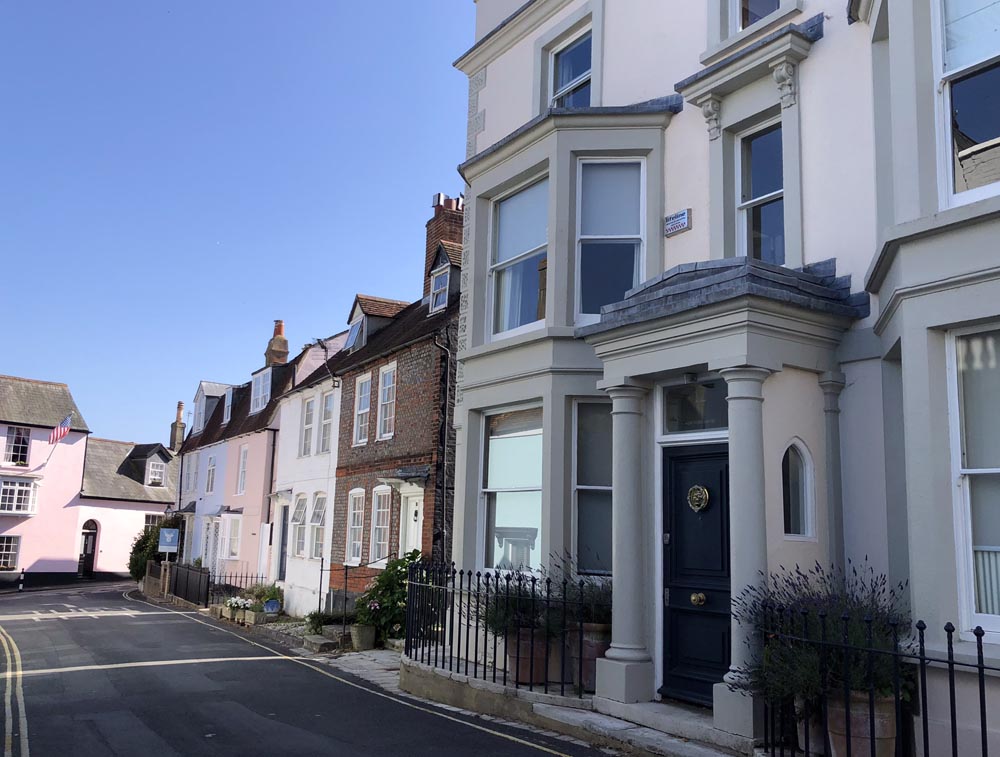
The history of a house can include the physical features and past of the building itself, but also who lived there, their personal stories, and the history of the place where the house is located.
A whole range of sources are used to help build the story of the house. These may include:
- historic maps, compiled for a variety of purposes
- census returns
- directories
- electoral registers and poll books
- deeds
- building control documentation
- rate books
- valuation lists
- estate papers
- tithe documentation
- sales particulars
- probate documents
- historical tax documentation
- newspaper reports
Some of the sources are available online; others are lodged with the Isle of Wight County Archives, or other archives located on the mainland.
Two options for the research
Every house history project is different. Some may be well-documented at the local archives; others may not. There are also differences between the types of records available for different parts of the Isle of Wight. For this reason I charge by the hour for this work, and am happy to work in manageable chunks of time, reporting back at the end of each period.
There are two options for the scope of the research:
- Focusing primarily on the property: the bricks and mortar. Here, we would include the names of people recorded at the house in the censuses (1841-1921) but no other information about them.
- The second option is to build on the above but to expand the information about the people. For example there may be interesting stories about the people living in the house, or events that happened there. It is possible to start with option one and progress to option two if research suggests there will be stories to find. Some multi-generational stories involve building out family trees.
What you’ll get from me
- A full report of all research carried out, including analysis and reasons for my conclusions.
- Information included will depend on your instructions, for example you may be interested in the ‘stories’ of the past residents, or you may simply wish for a list of names. Alternatively, as research progresses you may decide to include this. It’s up to you.
- Copies and transcriptions of all records identified and drawn upon in the research. These will include some or all of the record types listed above. If you are also interested in the lives of the former residents, records included could also include Civil Birth, Marriage and Death certificates*; Religious Baptism, Marriage and Burial register entries; Municipal Cemetary registers; Military Attestation, Service Record or Pension documentation; Newspaper reports; Criminal records; Electoral, Poll Book or Directory entries; Probate documents, including Wills*. Please note that the cost of documents marked with an asterisk* will be charged extra (at cost).
- To keep costs down, where I consider the information recorded on any of these documents is available (or largely available) online at no additional cost, I will discuss this with you, explaining what benefits there might be in incurring the additional costs. We will then proceed accordingly. Any documents purchased and received as hard copies will belong to you and will be posted to you at the end of the research.
- Depending on your choices, it may be appropriate to include one or more small family tree charts showing relationships between the residents.
- Where possible, and if appropriate to your needs, I try to step back and look for the stories: what was happening in society or politics, locally and nationally, that might have impacted on the lives of the residents of your house of interest?
- Old photographs of the house and/or locality, where available.
- Any further areas for potential research that you might like to explore will also be included.
- The report will be delivered to you by email.
- If required, arrangements can be made for printing.

 English Ancestors